
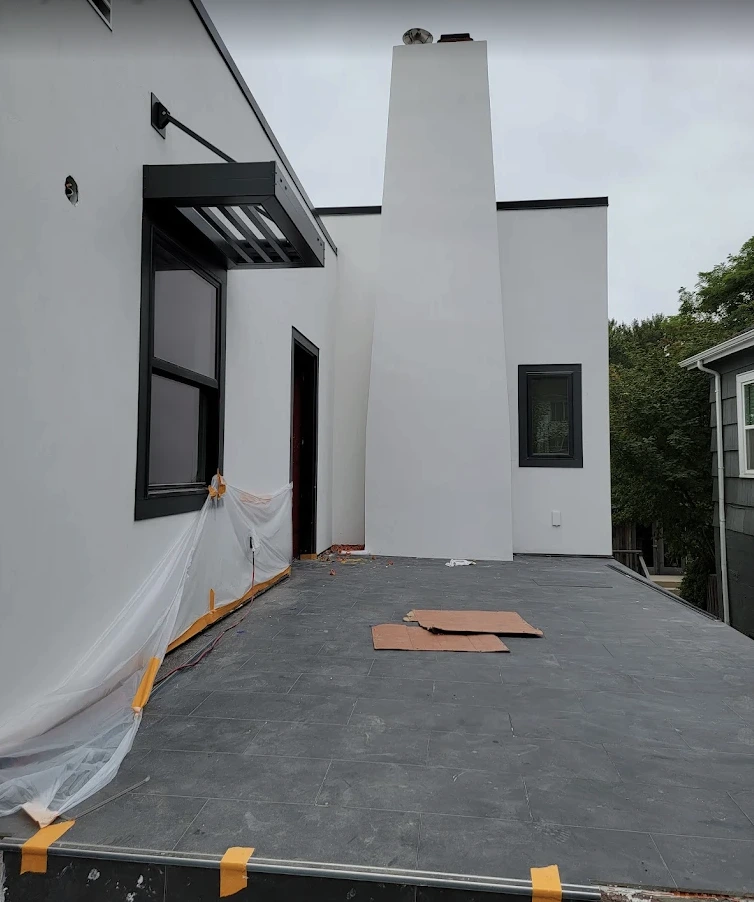
Choosing an exterior finish for a Texas home is not the same as choosing one in the Pacific Northwest or the Northeast. The Central Texas climate — triple-digit summers, intense UV year-round, clay soils that heave with moisture cycles, occasional hail, and rare but real freeze events — creates a specific set of demands that favor some materials over others.
As stucco contractors who have worked on thousands of Austin-area homes, we see how every common exterior material holds up over time. Here is an honest comparison.
Stucco
**Best for:** Long-term durability, architectural versatility, heat resistance
Stucco is a cement-based system applied in multiple coats over a lath and weather barrier. It creates a seamless, monolithic finish that handles Texas conditions extremely well.
**Strengths in Texas:** High thermal mass regulates interior temperatures. UV-resistant when finished with quality acrylic coatings. Noncombustible (one-hour fire rating). Handles hail better than vinyl or wood. Can be applied in virtually any texture and color. Lasts 50 to 80 years.
**Weaknesses:** Requires proper installation with control joints and drainage planes to handle clay soil movement. Hairline cracks from settling are normal and need periodic attention. Higher upfront cost than vinyl.
**Cost:** $8 to $15 per square foot installed.
Brick
**Best for:** Zero-maintenance longevity, traditional Texas aesthetic
Brick is a proven material in Texas. It resists fire, pests, rot, and UV degradation essentially indefinitely.
**Strengths in Texas:** Virtually no maintenance. Excellent fire and hail resistance. A strong match for traditional Texas ranch and Hill Country architectural styles. For a detailed comparison, see our stucco vs brick guide.
**Weaknesses:** Heavy — requires engineered foundation support. Limited color and texture options compared to stucco. Mortar joints need repointing over decades. Thermal mass works both ways: brick absorbs and radiates heat, which can warm the interior on summer evenings. More expensive than most alternatives.
**Cost:** $10 to $25 per square foot installed.
Fiber Cement (Hardie Board)
**Best for:** Moderate budgets, neighborhoods with mixed siding styles
Fiber cement siding — James Hardie is the dominant brand in Texas — is a composite of cement, cellulose fiber, and sand pressed into planks or panels.
**Strengths in Texas:** Noncombustible. Resists termites and rot. Handles UV better than vinyl or wood. Available in pre-finished colors that hold up well. See our detailed stucco vs Hardie Board comparison.
**Weaknesses:** Seams and joints are visible — it does not offer the seamless look of stucco. Requires repainting every 10 to 15 years. Installation is labor-intensive because each plank must be individually cut and fastened. Can crack on impact.
**Cost:** $6 to $12 per square foot installed.
Vinyl Siding
**Best for:** Budget-conscious projects, rental properties
Vinyl is the least expensive exterior cladding option. It is lightweight, available in many colors, and installs quickly.
**Strengths in Texas:** Lowest upfront cost. Easy to wash. Does not need painting.
**Weaknesses:** Warps and buckles under sustained heat — a serious concern in Austin where summer surface temperatures on south-facing walls can exceed 150 degrees. Fades significantly with UV exposure. Dents and cracks from hail. Melts near heat sources. Offers no insulation. Looks like a budget choice in neighborhoods with stucco or stone. See our stucco vs vinyl siding breakdown.
**Cost:** $4 to $8 per square foot installed.
Natural Stone
**Best for:** High-end accents, fireplace surrounds, estate properties
Natural stone — Texas limestone, Austin stone, ledgestone — is a premium exterior material with unmatched character.
**Strengths in Texas:** Essentially permanent. Fireproof. Complements Hill Country architecture beautifully. Requires zero maintenance.
**Weaknesses:** Extremely expensive for full-facade application. Heavy — requires substantial structural support. Limited to accent applications on most residential budgets. Our thin stone veneer service offers a lighter, more affordable alternative that achieves a similar look.
**Cost:** $20 to $40 per square foot installed (full-thickness). Thin veneer: $15 to $35.
EIFS (Synthetic Stucco)
**Best for:** Energy efficiency, commercial buildings, modern design
EIFS is a multi-layer system with a foam insulation board, fiberglass mesh, base coat, and acrylic finish. It looks like traditional stucco but provides continuous insulation.
**Strengths in Texas:** Best-in-class energy efficiency with R-values of 4 to 6. Lightweight. Seamless finish. Excellent for modern commercial and residential design.
**Weaknesses:** Requires specialized installation and repair — not every contractor is qualified. Older barrier-style EIFS (common on 1990s Austin homes) is prone to moisture problems if not properly detailed. Drainable EIFS systems solve this but add cost.
**Cost:** $10 to $18 per square foot installed.
Our Recommendation for Austin
For most Austin homeowners, **traditional stucco** offers the best combination of durability, energy performance, aesthetics, and long-term value. It handles the Texas climate better than vinyl or wood, costs less than full brick or stone, and lasts decades longer than fiber cement.
For energy-focused projects or commercial buildings, **EIFS** is the strongest performer when installed by a qualified contractor.
For accent features — entryways, fireplaces, landscape walls — **thin stone veneer** adds character without the structural requirements of full-thickness stone.
Get Expert Advice
Not sure which material is right for your project? Contact Star Stucco of Austin for a free consultation. We work with stucco, EIFS, and thin stone veneer across the Austin metro. Call (512) 706-9699.
Frequently Asked Questions
What is the most durable exterior material for Texas homes?
Brick and stucco are the most durable options. Both last 50 years or more with proper maintenance. Brick requires virtually no upkeep. Stucco requires occasional crack inspection but offers more architectural flexibility and costs less than brick.
What exterior siding handles Texas heat best?
Stucco and brick handle extreme heat best because of their thermal mass and UV resistance. Vinyl siding is the worst performer in Texas heat — it warps and buckles under sustained high temperatures, especially on south- and west-facing walls.
Is stucco or Hardie Board better for Austin?
Both perform well in Austin. Stucco offers a seamless finish, lasts longer (50+ years vs 30 for Hardie), and provides better thermal mass. Hardie Board costs less and suits neighborhoods with a plank-siding aesthetic. Stucco is the better long-term investment for most Austin homes.