
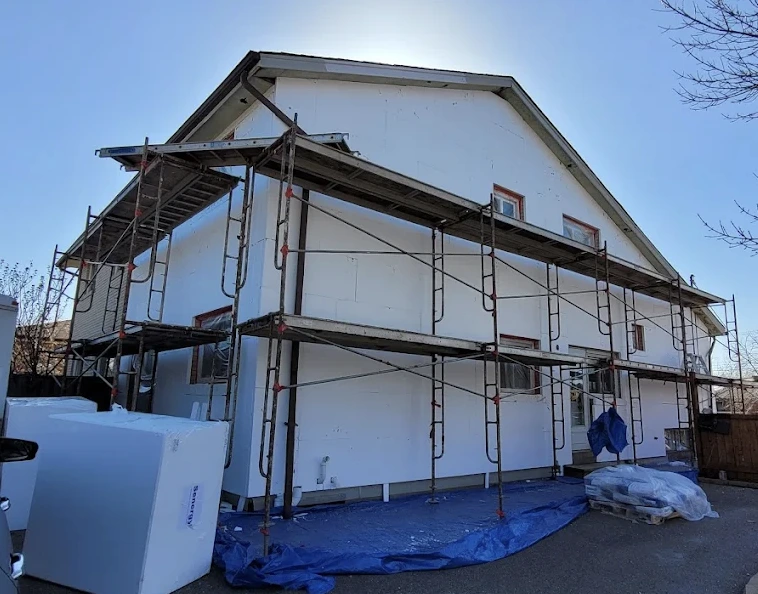
One of the first questions homeowners ask about stucco is how long it will last. The short answer is a long time — traditional stucco is one of the most durable exterior cladding materials available, with a lifespan that routinely exceeds 50 years and can reach well beyond that. But the real answer depends on the type of stucco system, the quality of the original installation, how well the home is maintained, and the climate it faces every day.
In Austin, where the climate is demanding and the soils are unforgiving, understanding these factors helps you get the most out of your stucco investment and know when maintenance, repair, or replacement makes the most sense.
Lifespan by Stucco System
Not all stucco is the same, and different systems have different expected lifespans:
Traditional Three-Coat Stucco
The classic three-coat system — scratch coat, brown coat, and finish coat applied over metal lath — is the gold standard for longevity. When properly installed and maintained, three-coat stucco routinely lasts **50 to 75 years or more**. There are cement stucco buildings in the American Southwest and Mexico that have stood for centuries. The material itself does not degrade from age; it is the combination of environmental stress, movement, and neglected maintenance that eventually requires repair or replacement.
Three-coat stucco is the thickest and most rigid system, which makes it the most durable against impact and weather but also the most prone to cracking when foundations move — a relevant consideration in Austin.
One-Coat Stucco
One-coat systems use a single, thicker application of a polymer-modified stucco over lath and a fiberglass mesh. They cure faster and are less labor-intensive, which makes them popular for production homebuilding. Expected lifespan is **30 to 50 years**, depending on installation quality. One-coat stucco is somewhat more flexible than traditional three-coat, which gives it better resistance to hairline cracking, but it is thinner and less impact-resistant overall. Many of the homes built during Austin's building boom of the 2000s and 2010s in communities like Mueller, Avery Ranch, and Falcon Pointe use one-coat systems.
EIFS (Synthetic Stucco)
EIFS — Exterior Insulation and Finish System — uses a foam insulation board with a polymer base coat, fiberglass mesh, and an acrylic finish. Expected lifespan is **30 to 50 years** with proper maintenance. The flexible acrylic finish resists cracking better than cement-based systems, but the finish coat weathers faster under UV exposure and may need recoating every 10 to 15 years. The biggest longevity risk with EIFS is moisture intrusion — if sealant joints fail and water reaches the substrate, damage can be rapid and hidden. For a deeper look at EIFS, see our guide to what EIFS is and our comparison of EIFS vs. traditional stucco.
Factors That Affect Stucco Lifespan
The number of years you actually get from your stucco depends on several variables, some within your control and some not:
Installation Quality
This is the single biggest factor. A stucco system installed by an experienced contractor with proper lath attachment, correct mix ratios, adequate curing time, well-placed control joints, and correct flashing and weep screed details will dramatically outperform a rushed or poorly applied job. Many of the stucco failures we repair in Austin trace back to installation shortcuts — skipped control joints, insufficient lath overlap, wrong mix, or curing that was too fast in the summer heat. Choosing a qualified Austin stucco contractor is the most important decision you make for your stucco's longevity.
Maintenance
Stucco is low-maintenance, but it is not no-maintenance. The homes whose stucco lasts the longest are the ones where the owner inspects annually, seals cracks early, replaces failed sealant around windows and doors, and keeps landscaping and soil graded away from the base of the wall. Deferred maintenance is the number one reason stucco fails before its time — a $300 crack repair ignored for two years becomes a $3,000 moisture remediation.
Climate
Austin's climate is among the more demanding in Texas for exterior materials. The combination of intense UV, daily thermal cycling (surface temperatures on a west-facing wall can swing 70 degrees in a single day during summer), heavy spring rains, occasional hail, and high humidity all contribute to wear. South- and west-facing walls age fastest because they absorb the most heat and UV. Stucco on shaded or north-facing walls often looks noticeably better after 20 years than stucco on the sun-exposed sides of the same house.
Soil and Foundation Movement
Austin sits on some of the most expansive clay soil in the state. The Blackland Prairie soils in East Austin, the clay-heavy ground across Round Rock, Pflugerville, and Cedar Park, and the Edwards Plateau formations in the Hill Country all swell when wet and shrink when dry. This movement flexes foundations and walls, and stucco — particularly the rigid three-coat system — cracks under the stress. The cracks are repairable, but repeated movement without maintenance accelerates deterioration.
How to Extend Your Stucco's Lifespan
You cannot control the weather, but you can control maintenance. These steps add years to any stucco system:
- **Inspect every spring and fall** — Walk the exterior and look for cracks, staining, efflorescence, bulging, and failed sealant. Catching problems early is the single most cost-effective thing you can do.
- **Seal cracks immediately** — Every crack is a water entry point. A hairline crack sealed this month costs a fraction of the moisture damage it could cause over the next rainy season. Read our guide to stucco crack repair in Austin for details on what to look for.
- **Replace sealant every 5 to 7 years** — The caulk around windows, doors, and penetrations has a finite lifespan. Proactive re-sealing keeps water out before old sealant fails.
- **Keep the base of the wall clear** — Landscaping, mulch, and soil piled against the stucco trap moisture and block the weep screed. Maintain at least four inches of clearance between the grade and the bottom of the stucco.
- **Recoat when the finish shows wear** — An elastomeric coating applied when the original finish starts to chalk or fade restores weather protection and extends life by years.
- **Address drainage and grading** — Make sure the ground slopes away from your foundation. Standing water at the base of a stucco wall is a recipe for accelerated deterioration.
When Does Repair Make Sense vs. Replacement?
Not every aging stucco wall needs to be replaced. In most cases, targeted repair is the better value:
Repair Is the Right Call When
- Damage is localized — isolated cracks, small patches of delamination, or limited areas of moisture intrusion.
- The underlying substrate (sheathing and framing) is sound.
- The stucco system as a whole is structurally intact and performing.
- The homeowner plans to maintain the system going forward.
Most stucco problems fall into this category. A skilled contractor can repair cracks, patch damaged areas, and texture- and color-match the surface so the repair is invisible. Visit our stucco repair services page for more on what repair involves.
Replacement Is the Right Call When
- Damage is widespread — cracking, delamination, or moisture intrusion across large sections or entire elevations.
- The substrate is rotted, moldy, or structurally compromised.
- The original installation had systemic defects (missing weather barrier, no control joints, incorrect lath) that make patching a temporary fix at best.
- Multiple prior repairs have not held, indicating an underlying issue that surface work cannot solve.
Full replacement is a larger investment, but it gives you a fresh, properly built system that resets the longevity clock. For many homeowners, replacing one failing elevation while maintaining the rest of the house is a practical middle ground. Our stucco remediation page covers the process in detail.
How Does Stucco Compare to Other Exteriors?
Traditional three-coat stucco (50 to 75+ years) falls behind only brick (75 to 100+ years) in raw longevity. It outlasts fiber cement siding (30 to 50 years with repainting), wood siding (20 to 40 years), and vinyl (20 to 30 years). EIFS lands in the 30 to 50 year range. For detailed comparisons, see our guides to stucco vs. brick and stucco vs. Hardie Board.
The Bottom Line
Stucco is a long-lived, durable exterior that earns its reputation — but only when it is installed correctly and maintained consistently. The difference between stucco that lasts 30 years and stucco that lasts 70 years almost always comes down to installation quality and owner maintenance, not the material itself.
If your stucco is showing signs of age — cracking, staining, chalking, or soft spots — getting it assessed early is the best way to protect your investment and extend its life. Star Stucco of Austin provides free inspections across the Austin metro. As your local Austin stucco contractor and stucco repair specialist, we will tell you honestly what your stucco needs and what it will cost. Request a free estimate or call (512) 706-9699 today.
Frequently Asked Questions
How long does traditional stucco last?
Traditional three-coat cement stucco typically lasts 50 to 75 years or more when properly installed and maintained. The material itself does not degrade from age — it is environmental stress, foundation movement, and deferred maintenance that eventually require repair or replacement. Many stucco buildings in the Southwest have lasted well over a century.
How long does EIFS last compared to traditional stucco?
EIFS (synthetic stucco) typically lasts 30 to 50 years with proper maintenance. That is shorter than traditional three-coat stucco, primarily because the acrylic finish coat weathers under UV exposure and sealant joints require more frequent attention. However, EIFS offers superior energy efficiency thanks to its built-in insulation layer.
What is the most important factor in stucco longevity?
Installation quality. A stucco system installed by an experienced contractor with proper lath, correct mix ratios, adequate curing, well-placed control joints, and correct flashing will dramatically outlast a rushed or poorly applied job. Choosing a qualified contractor is the single most important decision for your stucco's lifespan.
How do I know if my stucco needs repair or replacement?
Repair is appropriate when damage is localized and the underlying sheathing and framing are sound. Replacement is warranted when damage is widespread, the substrate is rotted or structurally compromised, or the original installation had systemic defects that make patching a temporary fix. A professional inspection with a moisture assessment determines which approach makes sense.